
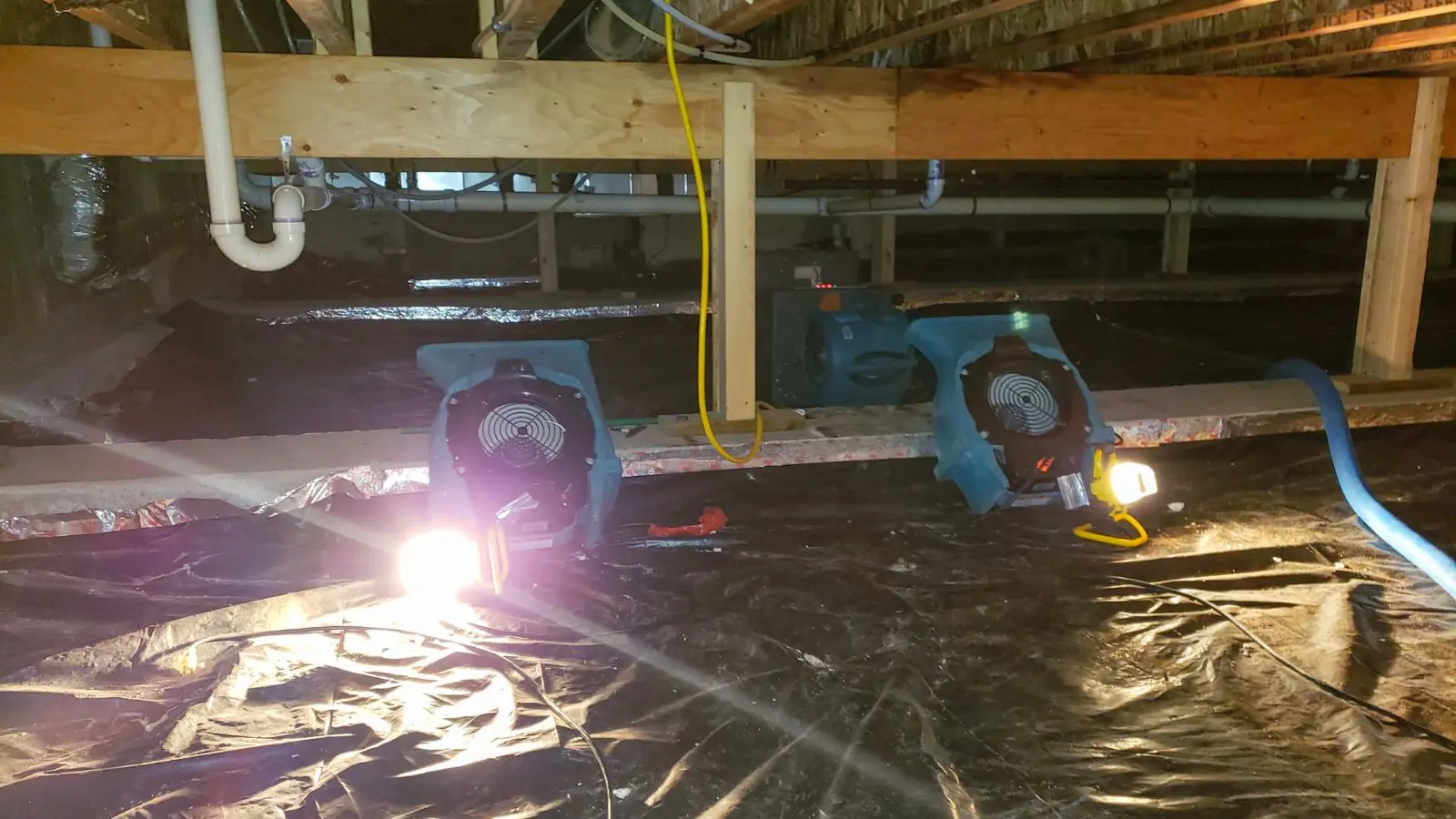
A crawl space is a low, unfinished area under a raised floor. Some homes have one, and it is easy to ignore until a plumbing leak, a drainage problem or high humidity turns it into a mold problem.
This guide covers how crawl space mold is assessed, how it is removed and why the cost depends on access and moisture more than anything else.
Why crawl spaces grow mold
A crawl space is cool, dark and often closed. Moisture comes from plumbing leaks, ground water seeping in, poor drainage outside, humid air in vents and sometimes a missing ground cover. Wood framing and insulation hold moisture, and mold follows if it stays.
Mold in a crawl space is almost always a symptom. Cleaning it without fixing the water source is a temporary job.
Safety before you look
- Wear a respirator, gloves, eye protection and coveralls.
- Tell someone before you go in, and take a light and a phone.
- Watch for wiring, plumbing and animals.
- Do not go in if there is standing water near electrical items.
- If the space is cramped or unstable, do not enter and call a professional.
Suspect mold under the floor? Call and describe what you saw and the access.
☎ Call (760) 769-1159How the process works
- Find and fix the source. A plumber repairs leaks. Drainage and ground cover issues are addressed.
- Assess the extent. Moisture readings and photos show what is affected.
- Contain and control air. Barriers and HEPA filtration protect the home above.
- Remove damaged materials. Wet insulation, vapor barrier fragments and affected subfloor are removed.
- Clean the framing. HEPA vacuuming and damp wiping clean joists and sill plates.
- Dry and verify. Dehumidifiers and airflow bring moisture readings to normal, then the area is checked.
| Factor | Effect |
|---|---|
| Access height and opening size | Tight crawl spaces slow every step. |
| Square footage | More area means more labor, cleaning and drying. |
| Insulation and debris | Removing insulation and debris adds labor and disposal. |
| Moisture source | Plumbing repair and drainage work are separate trades. |
| Drying days | Wet wood and soil need longer drying. |
| Protective measures | Vapor barriers and encapsulation are separate from remediation. |
We do not quote exact prices online. Scope and price are explained before work starts. Encapsulation and waterproofing are not remediation. If the space takes on water repeatedly, a drainage specialist is the right trade, and we say so.
After the cleaning: keeping the space dry
Once the space is clean and dry, the goal is to keep moisture out. Make sure downspouts discharge well away from the foundation and that soil slopes away from the house. Repair plumbing leaks promptly and keep vents clear of soil and plants.
A ground cover or vapor barrier can reduce moisture rising from the soil. Encapsulation is a larger project and is a decision to make with a contractor who specializes in it. Restoration crews clean and dry. They do not promise a space will stay dry forever.
Check the space once a season for the first year, look for dampness and musty smells, and call early if you notice either.
Signs the problem is under the floor
- A musty smell that is strongest near floor vents or along one wall.
- Floors that feel soft, bouncy or cold in one area.
- Visible condensation on ducts or pipes if you can see them.
- Insects or rodents that keep appearing near the same wall.
- Water stains on the underside of the subfloor, seen through an access hatch.
None of these prove mold. They are reasons to look, and to take photos you can share on the phone.
Crawl spaces in Poway homes
Poway has a mix of foundations. Some houses sit on slabs and others have raised floors, and which one you have depends on the year and the builder. Look for foundation vents and an access hatch, or check your plans, before you assume either way.
Slopes toward Twin Peaks and the Blue Sky Ecological Reserve can direct runoff toward a foundation after a storm, and Poway Creek runs through the city. Ask the city building department about drainage near your lot and check the FEMA flood map for your address.
Crawl space calls come in from Escondido older neighborhoods and from rural lots in Ramona as well. If the space has standing water, flood damage restoration explains how that is staged first.
Questions homeowners ask
Only with protection and care. Wear a respirator, gloves, eye protection and coveralls, tell someone, watch for wiring and avoid standing water near electrical items. If it is cramped or unsafe, call a professional.
No. Many houses sit on slabs, while others have raised floors. Look for foundation vents and an access hatch, or check your plans.
No. Remediation removes and cleans affected material. Encapsulation seals the space afterward and is a separate scope.
Air can move between levels. Containment and air filtration protect the living space during the work. Health questions belong to your physician.
Often only when it follows a covered water event, and many policies limit it. Ask your insurer.
Worried about the space under your floor? Call and describe what you saw.
☎ Call (760) 769-1159