
If water is standing in your home, call the 24/7 line at (760) 769-1159 now. While you wait, shut off the main water valve if a pipe or appliance is the source, keep everyone out of the water, and unplug small electronics only if the outlet and the floor in front of it are dry.
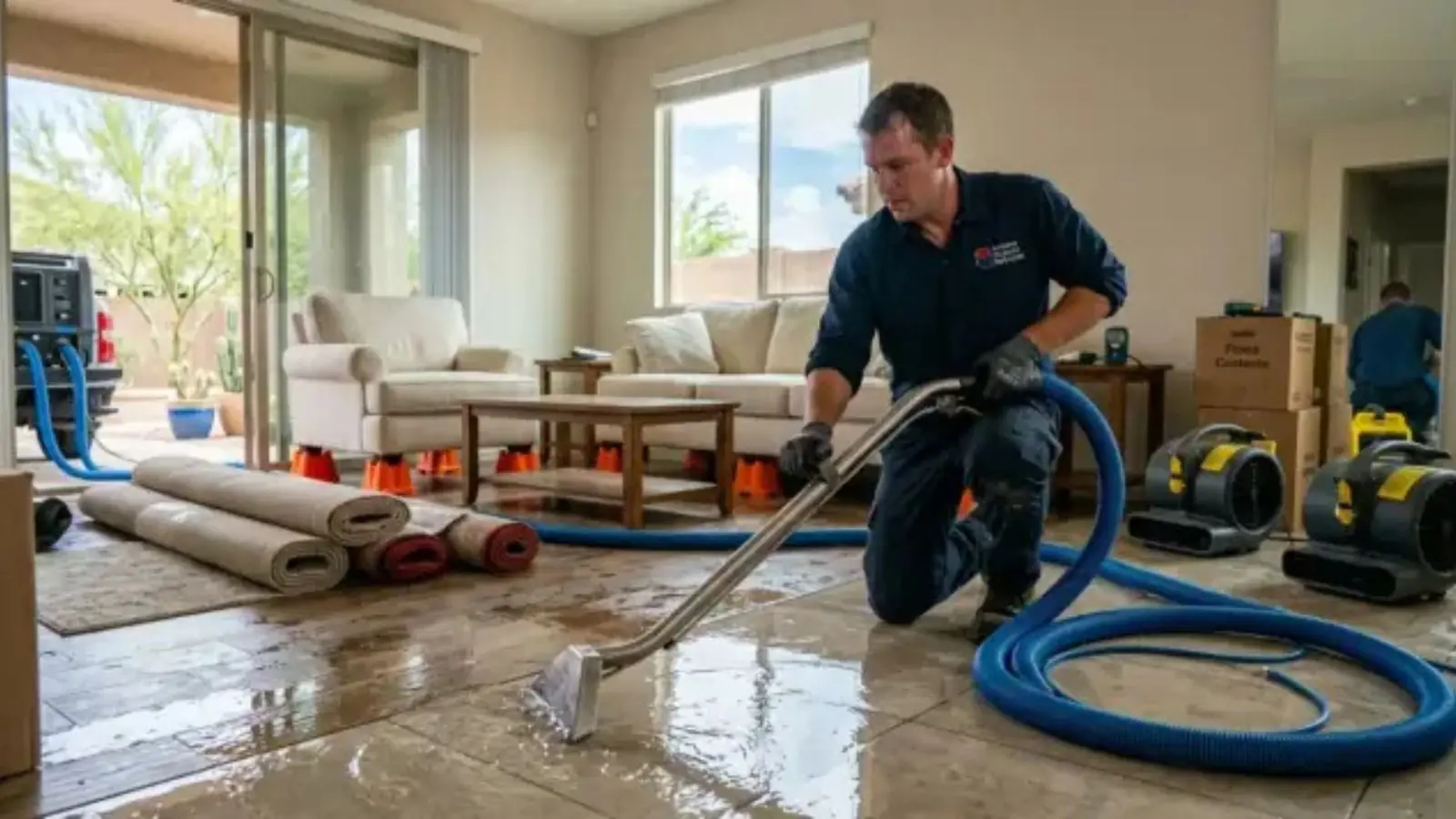
Emergency water removal is the extraction step. Pumps and wet vacuums pull the loose water out first, because every hour it stands, it soaks deeper into drywall, pad and subfloor.
Emergency water removal, also called water extraction, is the use of submersible pumps, truck-mounted or portable extraction units and wet vacuums to remove standing water from a structure before drying begins.
When standing water is an emergency
Standing water is an emergency from the first inch. An inch of water across a 1,000 square foot floor is hundreds of gallons, and it wicks upward into walls and cabinets within hours.
It is more urgent when the water is near electrical outlets, when it came from a drain or toilet, or when it is deepening. Do not wade through it to reach a panel or appliance. If the panel is in the water, leave it, and call the utility or 911 for any electrical or gas concern before you call us.
Safety first: water and electricity
Stay out of standing water if anything electrical is touching it, including extension cords and floor outlets. Cut power at the panel only if you can reach it while standing on dry ground. If you smell gas or see sparking, leave the building and call 911 or your utility before calling the restoration line.
How extraction works
Crews match the equipment to the depth and the surface. Submersible pumps move deep water quickly. Portable extraction units pull water from carpet and pad. Truck-mounted units handle large areas where hose reach and volume matter.
Hard floors are squeegeed and vacuumed. Carpet is extracted in passes, then the pad is checked, since pad holds the most water and is usually removed. When the loose water is gone, moisture mapping shows what is still wet, and drying equipment goes in. That hand-off is covered under structural drying.
Water on the floor right now? Call and describe the depth and the source. A dispatcher answers day and night.
☎ Call (760) 769-1159Burst pipe water damage
A burst pipe is the classic extraction call. A failed supply line under normal household pressure can release a large volume of water in an hour, and the water usually runs behind walls and down through ceilings before it shows. The first move is the main shutoff valve, which is typically at the front of the house, at the meter or at the side of the garage.
After the valve is closed, open a faucet at the lowest point to drain the line, and photograph everything before you move it. When we arrive, crews trace the water path with a moisture meter, extract what is standing, open wet ceilings that are bulging so they can drain, and set drying equipment. A plumber repairs the line. The restoration crew does not repair plumbing, and we say so up front.
| Situation | First move | What the crew adds |
|---|---|---|
| Burst or failed supply line | Close the main valve | Extraction, ceiling and wall checks, moisture mapping |
| Water heater leak | Shut off the cold supply and power or gas to the heater | Extraction, drying of the closet floor and adjoining walls |
| Washer hose or dishwasher failure | Shut the supply valve and unplug | Extraction, pad removal, subfloor drying |
| Toilet or drain overflow | Stop using fixtures, keep out of the water | Treated as contaminated. See sewage cleanup |
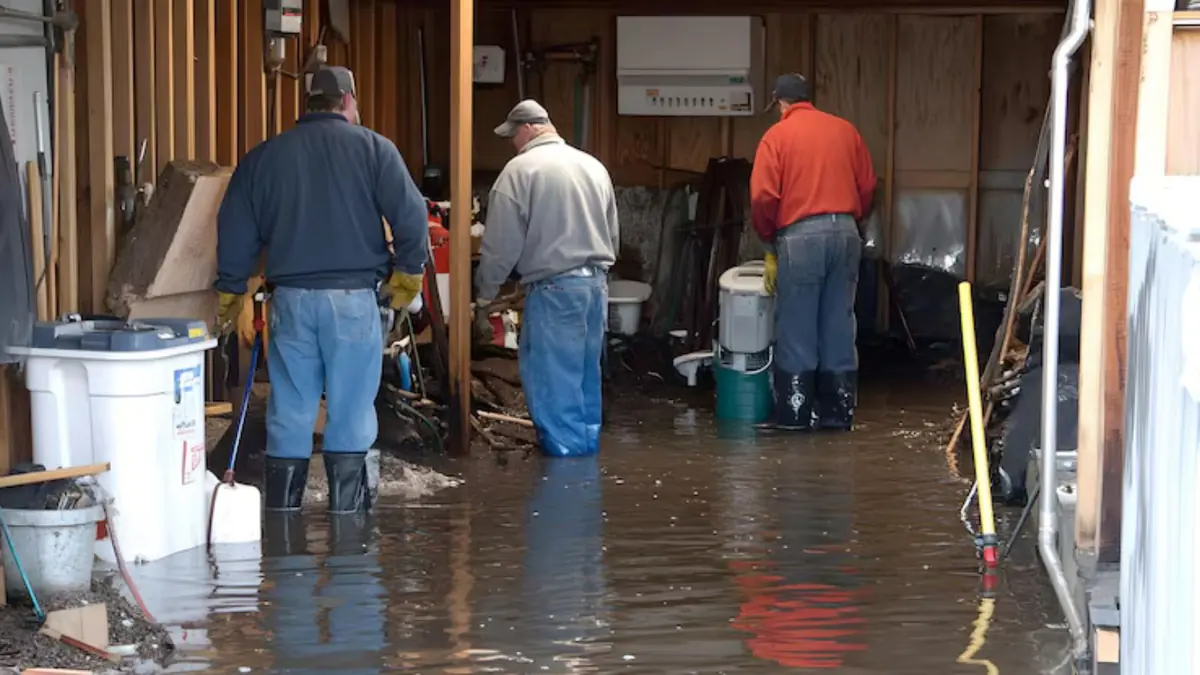
| Storm water through a door or garage | Move vehicles and valuables up | Extraction, then flood damage restoration scope if it spread |
Water removal in Poway
Poway's rain is concentrated in the cooler months, so most storm-driven calls come between November and March. A garage slab at the bottom of a driveway, a patio door on a graded lot and a lower level cut into a hillside are the usual places the water collects.
Houses near Poway Creek and the low spots around Poway Community Park should also keep a pump plan in mind for heavy storms. Ask your city building department about drainage near your lot and check the FEMA flood map for your address before the season starts.
What changes the cost of water removal
| Factor | Effect on scope |
|---|---|
| Water depth and volume | Deeper water needs larger pumps and more time. |
| Water category | Contaminated water adds protective gear, disposal and sanitizing. |
| Affected area | More rooms means more extraction passes and more drying equipment. |
| Surfaces | Carpet and pad take longer to extract than hard flooring. |
| Access and timing | Multi-level homes and after-hours dispatch change the setup. |
Scope and price are explained before work starts. For your real number, call (760) 769-1159.
Insurance, in general terms
A sudden pipe or appliance failure is often covered by a homeowners policy. Water that enters from outside as rising flood water is usually excluded and needs flood coverage. Check your policy, take photos before cleanup, and keep receipts. When the water is out and the structure is drying, water damage cleanup handles removal and sanitizing.
Frequently asked questions
Yes. Standing water ignores the clock, so the line stays open overnight and on weekends and holidays. When a crew can reach you the same day we say so, and we never promise an arrival time. Give the dispatcher the depth, the source and whether anything electrical is near the water.
As soon as it is safe. Within hours, water wicks into drywall, baseboards and cabinets, and within a day or two carpet pad and framing begin to hold moisture.
Close the main water shutoff, open a low faucet to drain the line, keep out of the water if it touches electrical items, and call the 24/7 line. A plumber repairs the pipe.
Yes. Garages, lower levels and any room with standing water are extracted. Contaminated water from a drain is handled with added protection.
No. Extraction removes the water you can see. Drying removes the moisture left inside materials and takes days. Both are usually needed.
Every hour of standing water costs you more material. Call the 24/7 line now.
☎ Call (760) 769-1159