
If water is moving through your Poway home right now, call our 24/7 line at (760) 769-1159 before you do anything that costs time. While you wait, shut off the main water valve if a supply line is the source, switch off power to wet rooms only if you can reach the panel without standing in water, and lift small valuables off wet floors.
Mitigation is the first 24 to 72 hours of a water loss. What gets done in that window decides how much drywall, flooring and insulation has to be torn out later.
Water mitigation is the work of stopping a water loss from spreading and drying the structure to a safe moisture level, using extraction, air movers, dehumidifiers and moisture readings that prove the materials are dry.
When water in your home is an emergency
Treat it as an emergency when water is still running, when it is dripping through a ceiling or light fixture, when it has soaked carpet or pad, or when it has been sitting longer than a day. Active water keeps finding new material to soak, and wet drywall and insulation start to hold moisture that a surface towel will never reach.
Water near outlets, a panel or ceiling fixtures adds an electrical risk. Stay out of that area, cut power only if you can reach the panel dry, and call the utility or 911 for any sparking, burning smell or gas odor before you call us.
My wall feels damp and the baseboard is swelling. Is that water mitigation?
Yes, and it is the stage most people miss. A wall that feels cool and damp, paint that bubbles, baseboards that swell or lift, a musty smell in a closed room, or a floor that suddenly feels soft are all signs that water got past the surface.
The trade name for the fix is water mitigation. It means finding where the water went with moisture meters and a thermal camera, then drying the wall cavity and subfloor in place when that is possible, or opening the wall when it is not.
What a mitigation crew does, in order
- Stop or confirm the source. A plumber or the homeowner closes the valve or repairs the line. Drying cannot finish while water is still entering.
- Extract standing water. Submersible pumps, wet vacuums and extraction units pull loose water out of carpet, pad and hard floors.
- Remove what cannot be saved. Soaked pad, saturated insulation and swollen baseboard come out so the structure can dry. Salvageable materials stay.
- Map the moisture. Meters and thermal imaging show where water traveled, including behind walls and under cabinets, and give a starting reading for every material.
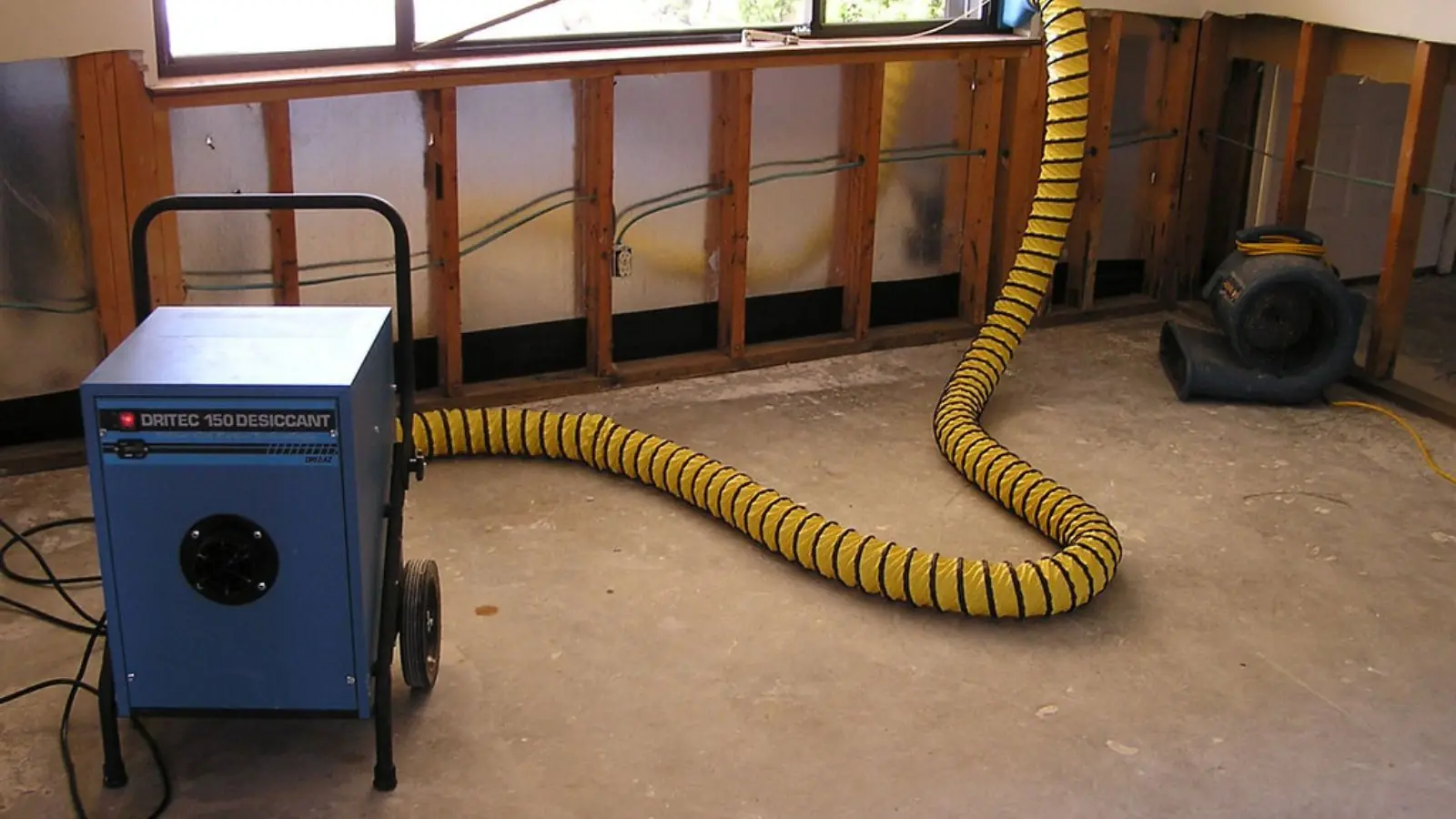
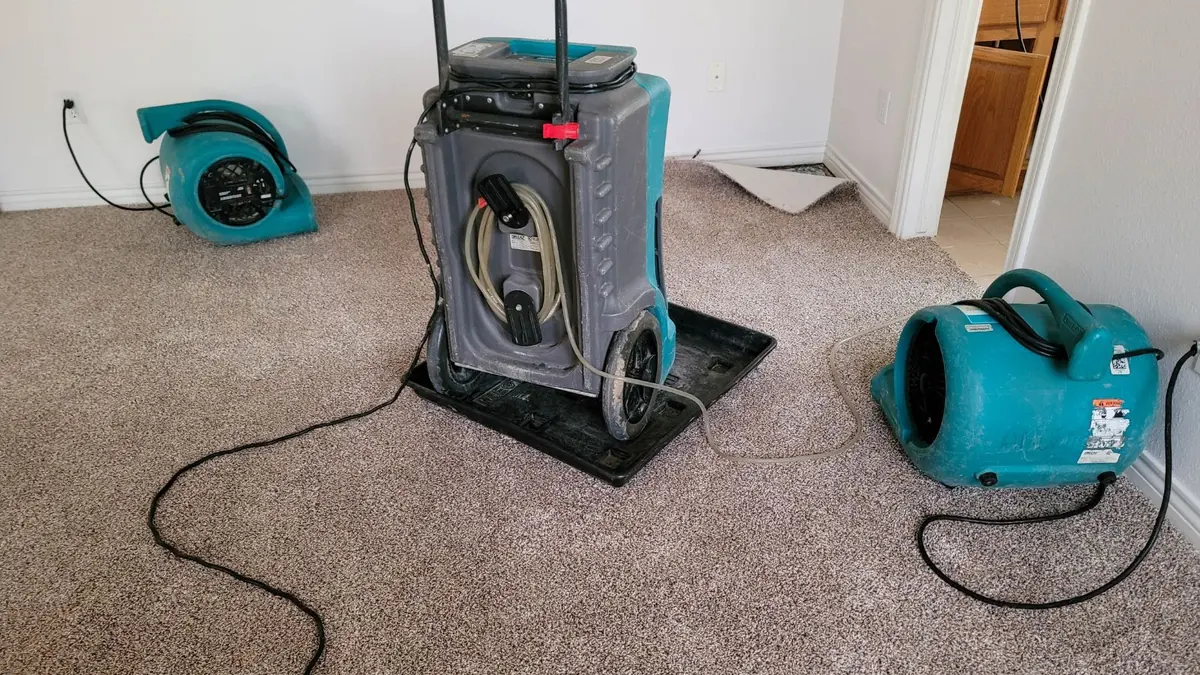
- Dry with controlled airflow. Air movers push air across wet surfaces and LGR dehumidifiers pull the moisture out of the room.
- Check readings daily. Crews compare each wet material against a dry reference reading from an unaffected part of the home and stop only when the numbers match.
Wet walls, soaked carpet or a ceiling that is dripping? A dispatcher answers day and night.
☎ Call (760) 769-1159Structural drying: why the equipment stays for days
Structural drying is the part of mitigation that happens after the water is gone from view. Wet drywall, framing, subfloor and plaster release moisture slowly, so the room is run as a closed drying chamber with air movers aimed at the walls and dehumidifiers pulling the humidity out of the air.
Most homes need several days of equipment time, and dense materials such as hardwood, plaster and thick framing take longer than carpet or drywall. The equipment is checked each day, moved if a reading stalls, and removed only when every material reaches its dry target under the ANSI/IICRC S500 water damage standard.
| Category | Typical source | What changes in the work |
|---|---|---|
| Category 1 | Broken supply line, overflowing sink, rainwater at the start | Extraction and drying. Most materials can be dried in place if the loss is caught early. |
| Category 2 | Washing machine or dishwasher discharge, toilet overflow without solids | Extraction, drying and sanitizing. Porous materials such as carpet pad are usually removed. |
| Category 3 | Sewage backup, floodwater, long-standing water | Treated as contaminated. Affected porous materials are removed and surfaces are cleaned and sanitized. See flood damage restoration. |
Where water hides in Poway homes
Many Poway homes sit on concrete slabs, and a slab does not tell you where water went. A leak under a kitchen or bath floor can travel sideways along the slab edge and show up as a damp baseboard in the next room, so crews map moisture across several rooms before they place equipment.
After a storm, a common pattern is water that came in at a window or a door threshold and wicked into the wall below it. Those leaks look small from the inside, and they are the reason crews carry a thermal camera as well as a meter.
What drives the cost of mitigation
Every loss is priced from its own scope, and the factors below are what move the number. Scope and price are explained before work starts, and if you want your real number, call (760) 769-1159.
| Factor | Why it matters |
|---|---|
| Water category | Category 2 and 3 water adds removal, cleaning and sanitizing steps. |
| Affected area | More wet square footage and more wet rooms means more equipment and more days. |
| Materials involved | Carpet and drywall dry quickly. Hardwood, plaster and concrete subfloors take longer. |
| Drying days and equipment | The count of air movers and dehumidifiers and the days they run drive the labor and equipment time. |
| Rebuild scope | Mitigation ends when the structure is dry. Replacing drywall, flooring and paint is a separate scope, covered under water damage repair. |
How insurance usually treats mitigation
Sudden and accidental water damage, such as a burst pipe or an appliance failure, is often covered by a homeowners policy, while gradual leaks and long-term neglect often are not. Flood damage from rising water is usually excluded and needs separate flood coverage. Check your policy or ask your insurer, because wording differs between carriers.
Whatever your coverage, photograph the damage before anything is moved, keep receipts, and ask the crew for the moisture readings and scope notes. Those documents are what an adjuster asks for.
If the water is also standing a few inches deep, our emergency water removal crew pumps it out first. Once the structure is dry, we can hand off to water damage cleanup for sanitizing or to repair for the rebuild. Customers in Escondido can see how we cover that side of the county on our Escondido page.
Frequently asked questions
Yes. Mitigation does not wait for business hours, so the line is staffed overnight, on weekends and on holidays. Same-day response is offered when available and an arrival time is never promised. Tell the dispatcher where the water is and what it has reached, and you will hear what to do about the valve, the power and your valuables while a crew is arranged.
Mitigation stops the spread and dries the structure. Repair rebuilds what was removed, such as drywall, flooring and paint. Mitigation comes first because rebuilding over wet framing traps moisture.
Plan on several days of equipment time for a typical room. Dense materials like hardwood, plaster and thick framing run longer, and carpet or drywall finish sooner. Crews read the meters each day and pull the equipment only when every material hits its dry target.
Air movers push air across wet surfaces so moisture leaves the material. LGR dehumidifiers pull that moisture out of the room air so it cannot settle back into the walls. They work as a pair, which is why one without the other dries slowly.
Often, when the cause was sudden and accidental, but not always. Gradual leaks and neglect are commonly excluded, and flood needs separate flood coverage. Read your policy or ask your insurer before you decide.
Wet walls keep getting wetter. Call the 24/7 line and describe what you can see.
☎ Call (760) 769-1159