
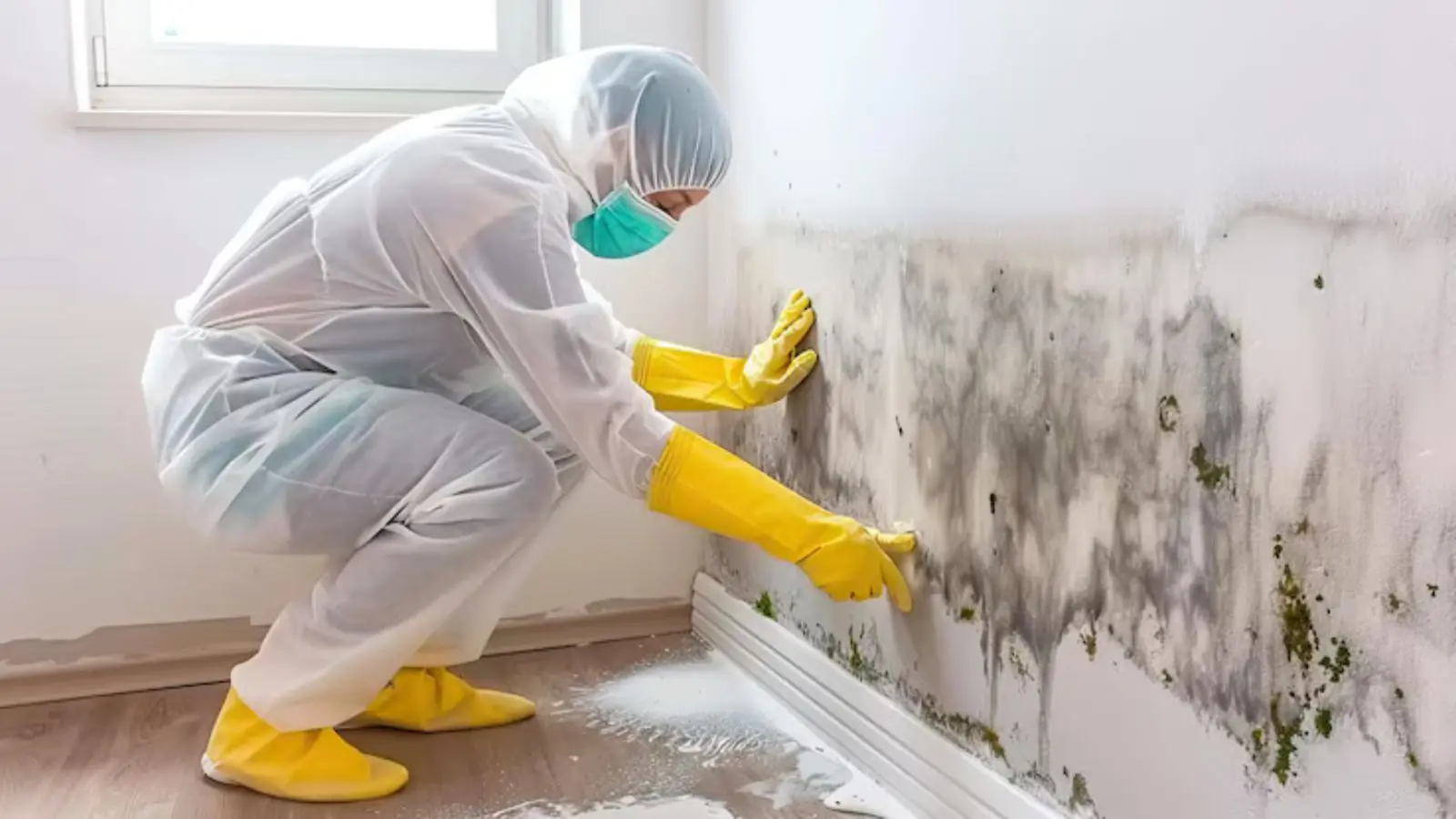
Mold remediation in Poway, CA begins with the water. Mold grows only where materials stay damp, so fixing the leak, drying the structure and then removing the mold, in that order, is what keeps a repair from failing.
If you can see mold, smell something musty or have had a leak you could not fully dry, call (760) 769-1159 to describe the room. A lender or buyer asking for mold clearance is a common reason for a call too.
Mold remediation is the containment, removal and cleaning of mold-affected materials, following ANSI/IICRC S520, after the moisture source has been identified and corrected.
I see dark spots on a closet wall. Is it mold, and who do I call?
Spots at the corner of a wall and ceiling, on the back of a closet, under a sink or along a bathroom ceiling are common places for mold. They may be mold, but color alone does not prove it, and a stain can also be dirt, dust or old water marks.
The trade name for the work is mold remediation, sometimes called mold removal or mold cleanup. If you are not sure, an inspection confirms what is there, where the moisture came from and how far it has spread. Questions about health effects belong to your physician.
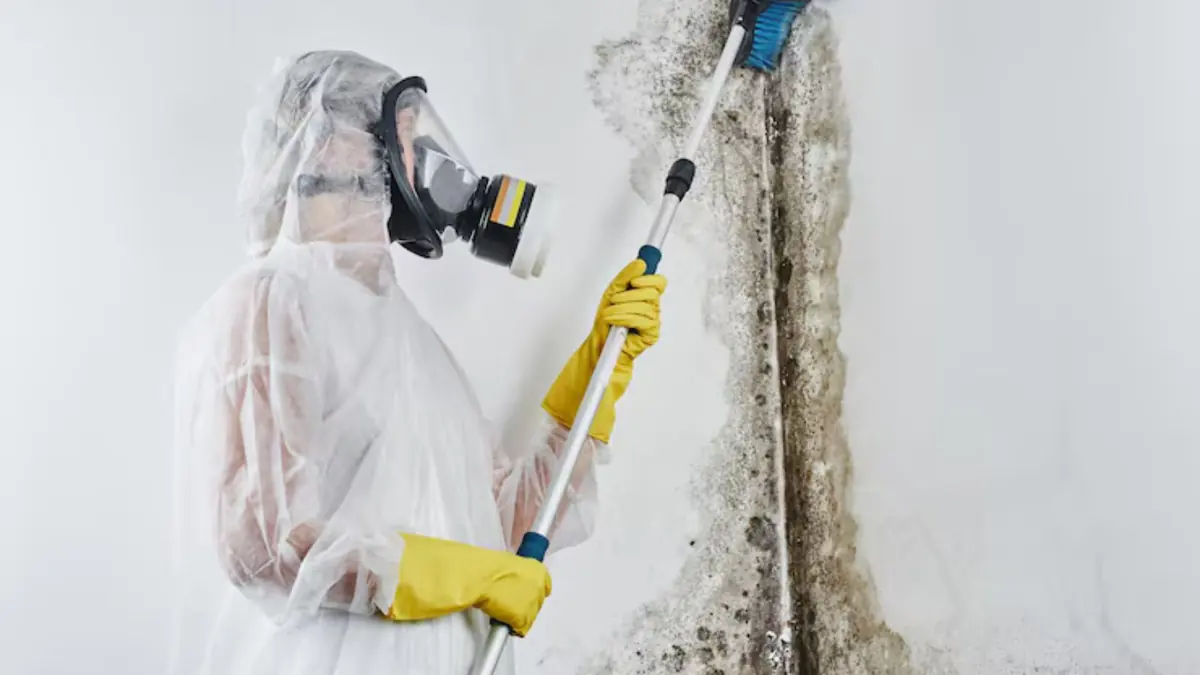
Mold after water damage
Most mold calls trace back to a leak. A toilet supply line upstairs, a sink drain, an air conditioner condensate line, a roof leak or a window that does not shed water can all wet a closet wall or ceiling for weeks before anyone sees it.
That is why we ask what leaked and when. Dried and repaired areas can look clean for a while and still hold moisture. Moisture meters and a thermal camera show whether the cause is gone, and whether the surfaces are dry enough to rebuild. Fixing the source is a plumber's or roofer's job, and we confirm it before work starts.
Not sure whether it is mold or a stain? Call and describe where it is and what leaked.
☎ Call (760) 769-1159Mold inspection, testing and clearance
Inspection starts with a visual survey and moisture readings. Sampling, when it is used, is done to answer a specific question, such as whether a space is clear after work. Testing is not always needed before cleanup, and results mean little without the moisture story behind them.
Clearance verification after remediation is often done by an independent assessor so that the person who did the work is not the one who clears it. If a buyer, lender or landlord is asking for clearance, tell us at the first call. We do not promise how a lender or buyer will respond.
Mold removal and black mold cleanup
Black mold is a color, not a diagnosis. Dark mold is handled the same way as other mold: contain the area, control dust, remove or clean affected materials and verify the result. Porous materials such as drywall, insulation and ceiling tile are usually removed. Semi-porous and solid framing is cleaned, HEPA vacuumed and dried.
Containment uses plastic sheeting and negative air so spores are not spread to clean rooms. Do not scrub dry mold, spray bleach on porous material or run a fan across it, since each can spread it.
| Material | Typical outcome | Why |
|---|---|---|
| Drywall and ceiling tile | Removed | Porous and hard to clean |
| Insulation | Removed | Holds moisture and growth |
| Wood framing | Cleaned, HEPA vacuumed, dried | Structural and cleanable when sound |
| Carpet and pad | Removed | Porous and slow to dry |
| Tile, glass, sealed surfaces | Cleaned | Non-porous |
Mold in Poway homes
Poway's climate is dry for much of the year, but closets, bathrooms and the backs of exterior walls stay damp wherever a leak or condensation line goes unnoticed. Winter rain from November to March puts roofs and window flashing to the test, and the first sign is often a stained ceiling in a back bedroom.
If your home has a crawl space or a lower level, those areas hold moisture longer. If you are not sure whether your home has either, a quick look at the foundation or the house plans answers it. We say plainly when something is outside our scope.
What changes the cost of mold remediation
| Factor | Effect on scope |
|---|---|
| Area affected | A spot on a closet wall and a whole ceiling are very different scopes. |
| Materials involved | Drywall and insulation come out. Framing is cleaned. |
| Containment needs | Larger containments, negative air and more protective gear add labor. |
| Moisture source | Drying days and the repair of the source change the timeline. |
| Testing and clearance | Independent clearance is a separate step with its own fee. |
| Rebuild | Replacing drywall, trim and paint is covered under water damage repair. |
Scope and price are explained before work starts. For your real number, call (760) 769-1159.
Insurance and mold
Mold is often covered only when it follows a covered water event, and many policies limit or exclude it. Ask your insurer, and keep photos, moisture readings and any inspection report. Ask any company whether its crews work to ANSI/IICRC S520, and ask whether your state licenses mold work before you sign. If water is still present, emergency water removal and cleanup come first.
Frequently asked questions
Look for dark or fuzzy patches, a musty smell and a history of leaks or condensation. An inspection with moisture readings confirms it. Color alone does not tell you.
Not always. Testing answers a specific question, such as whether a space is clear afterward. The moisture source and the visible growth usually decide the scope.
An assessor who did not do the work checks the area after remediation. Buyers and lenders sometimes ask for it. We do not promise how any lender will respond.
Bleach does not suit porous materials such as drywall and can leave moisture behind. Contain the area, avoid disturbing it and call for an inspection.
Mold needs moisture. If the source is fixed and the structure is dried, the conditions that supported it are gone. If moisture returns, mold can too, so we ask what leaked first.
Questions about a damp spot or a smell? Call and describe where it is.
☎ Call (760) 769-1159