
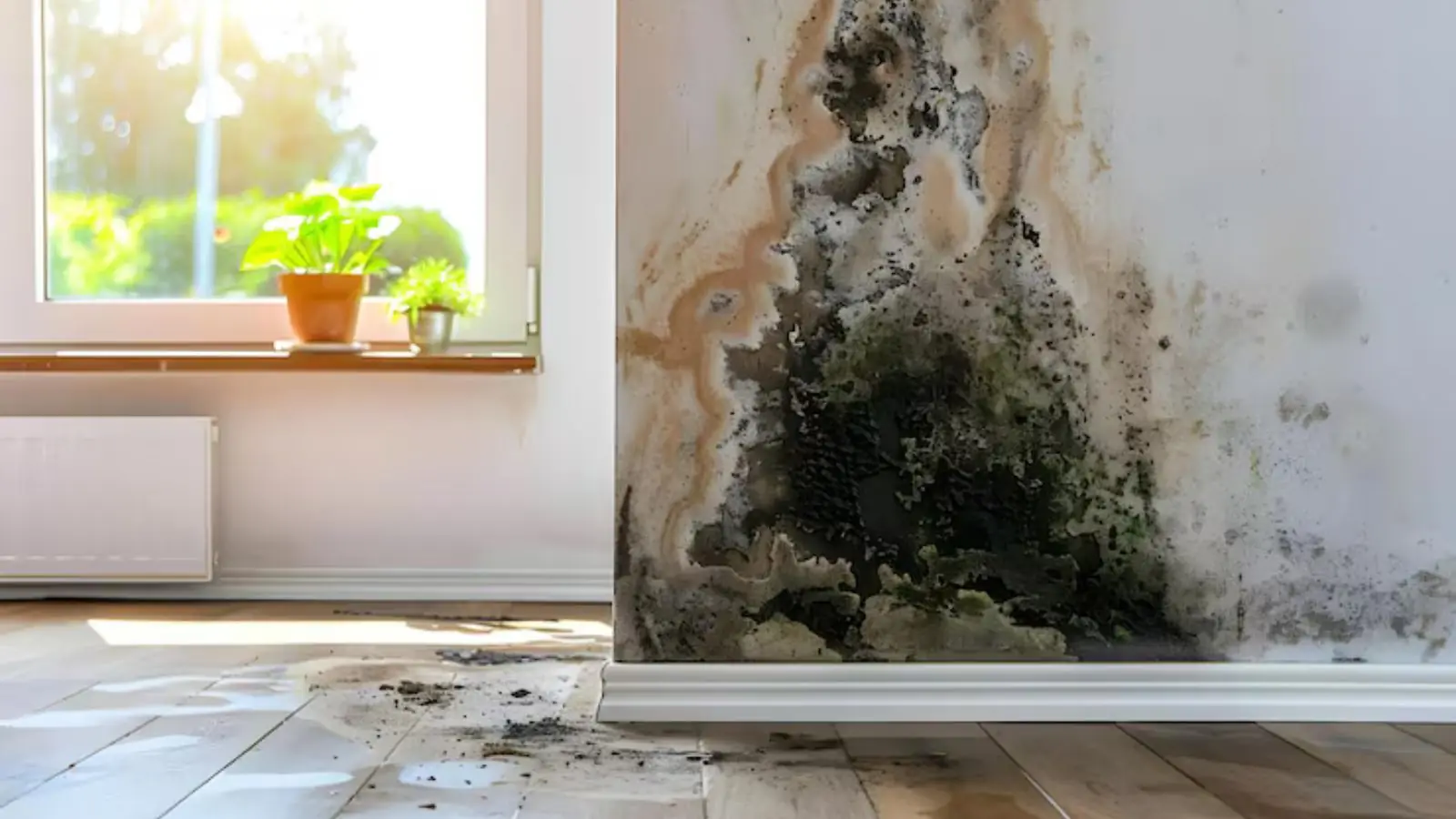
Closets and bathrooms are common places for mold to start after a leak. Both are small, closed spaces where moisture lingers, and both often sit next to a water source such as an air handler, a toilet supply or a shower valve.
The pattern is almost always the same: a leak wets a wall, ceiling or carpet, the area stays damp and mold follows. Finding the water is the first step.
Common leak sources behind closet and bathroom mold
| Source | Telltale sign | Who fixes it |
|---|---|---|
| AC condensate line or drain pan | Stain on a closet ceiling or wall below the air handler | HVAC technician |
| Toilet supply line or wax ring | Damp floor near the base, stain on the ceiling below | Plumber |
| Shower valve or pan | Soft wall, loose tile, stain on the adjoining room | Plumber or tile contractor |
| Sink drain or supply under the vanity | Warped cabinet floor, musty smell | Plumber |
| Bathroom fan with poor venting | Condensation and mold on the ceiling | Contractor or HVAC technician |
| Roof or window leak | Stain at the corner of an exterior wall or ceiling | Roofer or window contractor |
What to do first
- Stop the water. Close the fixture valve, turn off the air handler if the condensate line is clogged, or place a bucket under a roof leak.
- Photograph the area and note when you first saw the damp spot.
- Remove stored items and lift carpet only if you can do so without disturbing visible mold.
- Ventilate if the area is dry, but do not blow air across visible mold.
- Call a professional for an inspection if the area is larger than a small patch.
Seen mold near a leak? Call and describe where it is and what leaked.
☎ Call (760) 769-1159Cleaning a small patch safely
Small patches on non-porous surfaces such as tile, glass or sealed paint can be wiped with detergent and water. Wear gloves, eye protection and an N95 respirator, and keep children and pets out of the room.
Do not scrub drywall or carpet, since porous materials hold the mold below the surface. Do not mix bleach with other cleaners. If the damp area is larger than a patch, if the material is soft or if the smell returns, the job needs a professional assessment. Health questions belong to your physician.
When removal is needed
Porous materials such as drywall, ceiling tile, carpet and pad are usually removed when mold is established. Framing is cleaned and dried. The moisture source is repaired first, and the area is dried until readings are normal.
That sequence follows the ANSI/IICRC S520 mold remediation standard. The rebuild follows once the structure is dry, with water damage repair handling drywall, trim and paint.
Prevent a repeat
- Have the condensate line flushed before the hot season and ask about a float switch that shuts the unit off if the pan fills.
- Run bathroom fans during showers and for 20 minutes afterward, and confirm the fan vents outside, not into the attic.
- Replace toilet supply lines and washing machine hoses when they show wear, since failures are usually sudden.
- Keep closet contents off the floor and away from exterior walls so air can move.
- Check under sinks twice a year for dampness, stains and warped cabinet floors.
These habits do not guarantee mold will never appear. They reduce the moisture that mold needs, which is the only real prevention.
Closets, air conditioners and Poway summers
Poway is inland, and its summers run hot. The area's record high is 114 degrees Fahrenheit, so air conditioners work hard and the condensate line from an air handler in a hall closet or attic can clog and back up. Many of the closet leaks we hear about start exactly there.
Houses from the first tracts, built from about 1959, may have had their air handlers added later and tucked into a closet. If yours was, ask your HVAC technician where the drain line runs and whether a safety switch is installed.
The same causes appear in Escondido, where inland summers are hotter than the coast, and in Ramona, where the largest swings between hot days and cold nights add condensation. If water is still present, emergency water removal comes before any mold work.
Questions homeowners ask
Many HVAC technicians flush it once or twice a year, often before the hot season. Ask your technician what suits your system, and consider a float switch that shuts the unit off when the pan fills.
Bleach is not suited to porous materials and can leave moisture behind. Fix the source and call for an inspection if the area is more than a small patch.
No. Poor ventilation also causes condensation and mold on ceilings. A fan that vents outside and runs after showers helps.
Color alone does not tell you. An inspection with moisture readings and sometimes sampling answers it.
Often only when it follows a covered water event, and many policies limit it. Ask your insurer.
Spotted mold near a leak? Call and tell us where it is and what the water source was.
☎ Call (760) 769-1159