
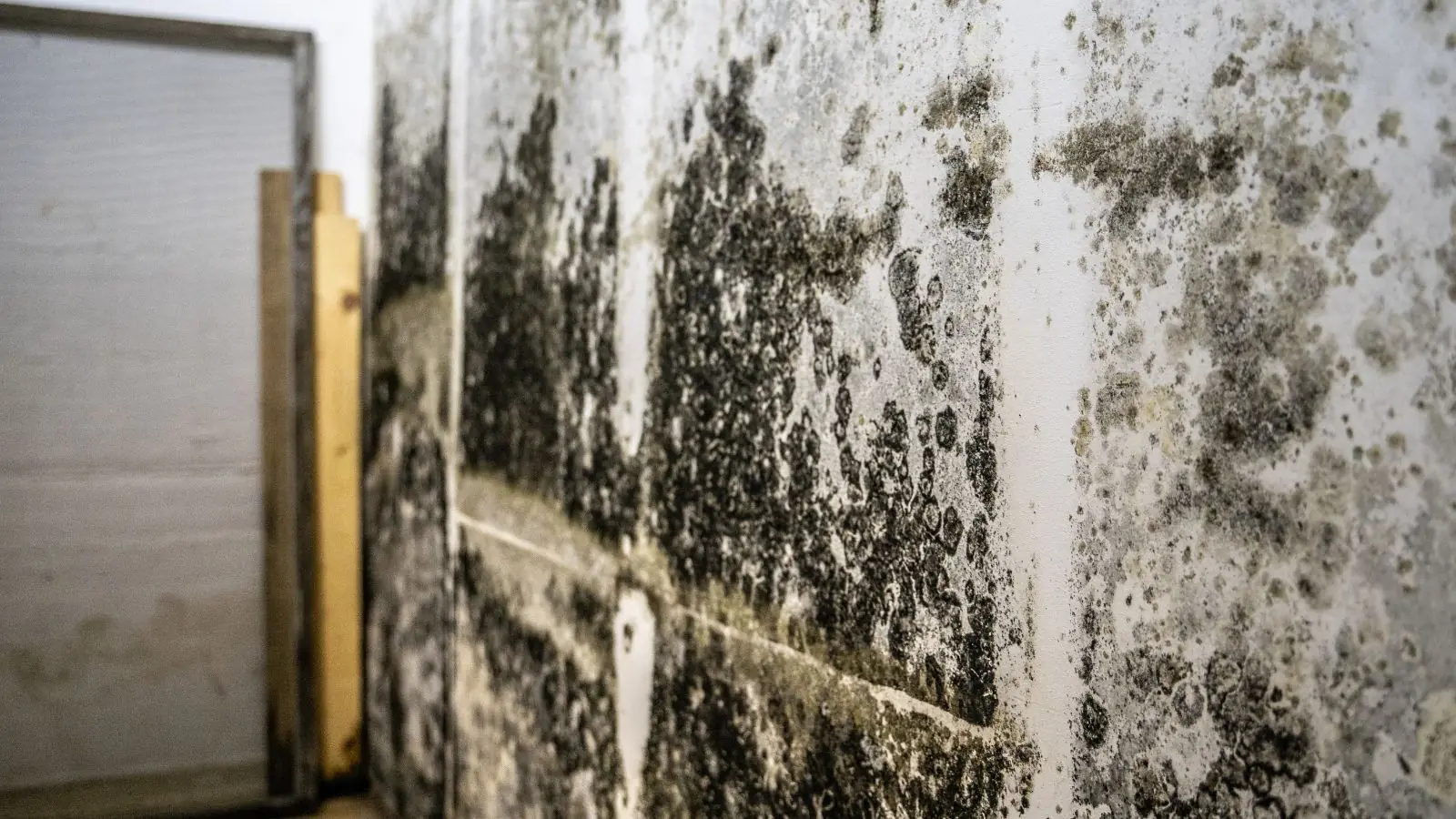
Mold on a basement or lower-level wall is a moisture problem first and a cleaning problem second. Scrubbing a wall without finding the water leaves the conditions that grew it. This guide covers the order of work for lower-level walls, whether the room is a true basement, a below-grade room or a lower floor cut into a hillside.
For health questions about mold exposure, talk to your physician. This guide covers the building side.
Find the moisture source first
Lower levels get wet in four main ways: groundwater moving through or around the wall, surface water from poor grading or gutters, plumbing leaks, and condensation on cool surfaces in humid air. Each one points to a different fix.
Look for efflorescence, the white mineral crust on concrete that signals moisture is moving through it. Note whether the wetness follows rain, follows the plumbing, or shows up on cool exterior walls in humid weather.
| Source | Signs | Fix |
|---|---|---|
| Groundwater or surface water | Damp after rain, efflorescence, stains near the floor | Grading, gutters and drainage. A drainage or foundation specialist. |
| Plumbing leak | Dampness follows a pipe run, rising water bills | Plumber repairs the line |
| Condensation | Water beads on cool walls and pipes in humid weather | Dehumidifier, insulation, ventilation |
| Appliance or drain overflow | Stains near a laundry or floor drain | Repair the appliance or drain |
Small patches on hard surfaces
A small area of surface mold on sealed concrete or painted block can be cleaned by a careful homeowner with detergent and water, wearing gloves, eye protection and an N95 respirator. Do not mix bleach with other cleaners.
Do not dry-scrub, use a fan across the area or spray bleach on porous materials. Stop if the area is larger than a patch, if it is on drywall, insulation or carpet, or if you cannot find the moisture source.
Seeing more than a small patch? Call and describe the room and what leaked.
☎ Call (760) 769-1159Larger areas: how remediation is done
- Fix the source. A plumber, roofer or drainage contractor stops the water.
- Contain the area. Plastic sheeting and negative air keep spores from spreading to clean rooms.
- Remove porous materials. Drywall, insulation, carpet and pad that are mold-affected are bagged and removed.
- Clean framing and surfaces. HEPA vacuuming and damp wiping remove residue from solid materials.
- Dry the structure. Dehumidifiers bring the room back to a normal moisture reading.
- Verify. A visual check, and sometimes independent testing, confirms the work.
Professionals follow the ANSI/IICRC S520 mold remediation standard. We do not promise that mold will never return, because that depends on the moisture conditions after the work. If the source is fixed and the structure is dry, the conditions that supported it are gone.
Humidity control afterward
Keep indoor humidity in a moderate range. Many sources suggest keeping it below about 50 percent, and a hygrometer costs little. Run a dehumidifier in lower levels during wet months, direct downspouts away from the foundation and keep vegetation off exterior walls.
Storage matters too. Cardboard boxes against a lower-level wall hold moisture, so shelve items off the floor and away from the wall.
Belongings in a damp lower level
Items stored against damp walls pick up mold quickly. Hard goods such as glass, metal and sealed plastic can be cleaned with detergent and dried. Paper, cardboard, fabric and upholstered furniture that show growth are harder to save and are often discarded.
Photograph anything you throw away and keep a list. Move items you keep to a dry room, store them in plastic bins off the floor and check them again after a week.
Lower levels in Poway
Basements are not the norm everywhere in this part of San Diego County, so check what your home really has. Many Poway houses sit on slabs, while some have lower levels cut into hillsides or below-grade rooms. The hills toward Twin Peaks and the Blue Sky Ecological Reserve can direct runoff toward a foundation after a storm.
Poway Creek runs through the city, so any lot close to a creek or drainage channel deserves a closer look when you plan a lower-level repair. Check the FEMA flood map for your address and ask the city building department about drainage near your lot before you spend money on finishes.
Questions about lower levels come up in Escondido, where the hills north of the city add slopes, and in Ramona, where rural lots with detached buildings add more water paths. If water is still standing, flood damage restoration explains how that is handled first.
Questions homeowners ask
Look at your foundation from outside, check your plans or ask your agent. Many homes here sit on slabs, while others have raised floors with a crawl space or a lower level cut into a hillside. If you are unsure, a restoration or inspection crew can tell on a visit.
Bleach is not suited to porous materials such as drywall and can leave moisture behind. Contain the area, avoid disturbing it and call for an inspection.
Many sources suggest staying below about 50 percent. A hygrometer shows where you are.
Not always. Testing answers a specific question, such as whether the area is clear afterward. The moisture source and visible growth usually decide the scope.
Often only when it follows a covered water event, and many policies limit or exclude it. Ask your insurer.
Dampness in a lower level? Call and describe the room before anything is scrubbed.
☎ Call (760) 769-1159