
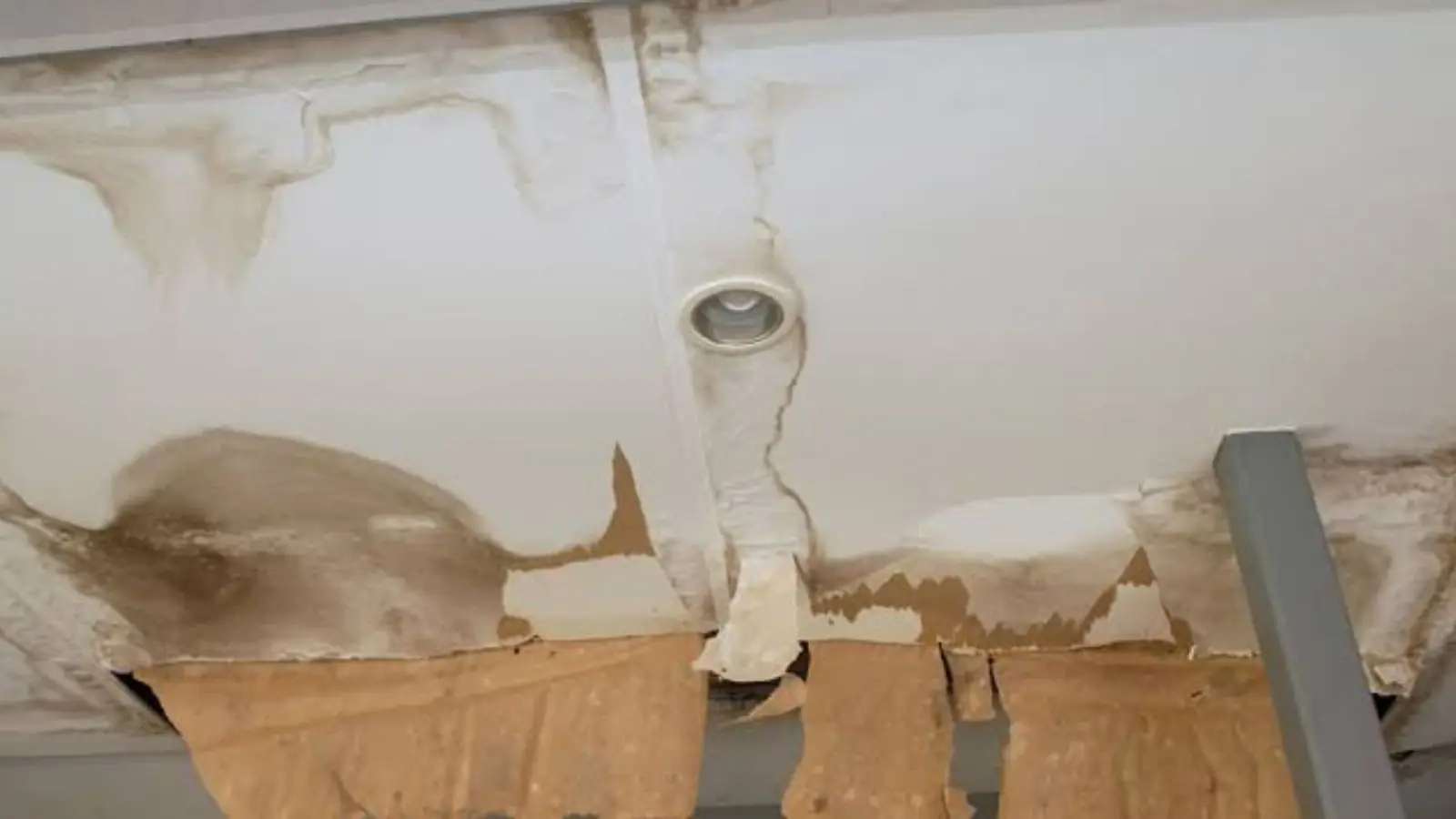
A roof leak often hides until it has soaked the attic insulation and reached the ceiling below. By the time a brown stain shows, the water has usually been traveling along rafters and drywall for a while.
This guide covers the signs of a roof leak, what to do during a storm and how the attic and ceiling are dried afterward.
Signs of a roof leak
- Brown or yellow ceiling stains, often with a ring that grows after rain.
- Stains near the corners of an exterior wall or around a light fixture.
- Peeling paint near the ceiling edge.
- Damp, compressed or discolored attic insulation.
- Daylight or wet staining on the underside of the roof deck.
- A musty smell in the top floor that gets worse after storms.
During the storm: what to do
- Place buckets and tarps below the drip and move valuables away.
- Protect light fixtures from water and keep the switch off if water is reaching them.
- Photograph the stain and the weather, and note the time.
- If the attic is safe to enter, look for wet insulation or a visible drip without stepping off the joists.
- Call a roofer for a temporary cover, and call our 24/7 line for water removal and drying inside.
Water coming through the ceiling during a storm? Call and describe it.
☎ Call (760) 769-1159Drying the attic and ceiling
Wet insulation does not dry well in place. It holds moisture, loses its effectiveness and invites mold, so saturated insulation is removed. The framing is dried with air movers and dehumidifiers, and moisture readings are taken before anything is closed up.
The ceiling below is dried or replaced depending on how soft the drywall is. Dried and cleaned areas are rebuilt only after the roof is repaired, and the leak is proven fixed by the next rain.
| What is damaged | Typical outcome |
|---|---|
| Attic insulation, lightly damp | Dried or replaced if it stays wet |
| Attic insulation, saturated | Removed and replaced |
| Roof decking and framing | Dried, inspected, replaced if soft |
| Ceiling drywall, firm and stained | Dried, sealed and repainted |
| Ceiling drywall, soft or sagging | Cut out and replaced |
| Visible mold | Handled under mold remediation before the rebuild |
Documenting a roof leak for insurance
Photograph the stains, the attic and the roof from the ground when it is safe. Keep the roofer's invoice and a note of what failed. Insurers ask whether the roof was damaged by a covered event or failed from age, and the answer changes coverage.
A moisture map of the ceiling and attic gives your insurer a clear picture of the affected area, and daily drying logs show the structure was handled properly.
Temporary cover or permanent repair?
During a storm, a roofer can often place a tarp or temporary patch to stop water entering. That is a stopgap, not a repair. A permanent repair replaces flashing, shingles or tiles, reseals penetrations and checks the decking underneath.
Ask the roofer to photograph the failure and the repair, and to name the cause. That record helps your insurer decide whether the roof failed from a covered event or from age.
While the roof waits for repair, keep drying the interior. Water that sits in an attic for a week does more damage than the original leak, and the cost of drying rises the longer it waits.
Checking the attic after the storm
Wait for daylight and dry weather. Use a flashlight, step only on joists and look for dark staining on the roof deck, wet or compressed insulation and rusted nail tips. Rusted nails and a sheen of moisture point to condensation or slow leaks.
Take photos with the date visible and send them to your roofer and your insurer. If you are not comfortable going up, a restoration crew can check with a thermal camera from below.
Roofs and rain in Poway
Poway's climate is dry for long stretches, then a few storms arrive between November and March. Roofs bake through the dry months, and the first storms of the season are when aged flashing, cracked sealant and worn valleys fail. The first stain of the year is often a storm leak.
Hillside lots toward Twin Peaks and the Blue Sky Ecological Reserve can see wind-driven rain that finds weak spots on exposed slopes. Know the year your roof was installed, since insurers ask, and keep the roofer's invoice with your claim records.
The same applies to roofs in Escondido and Ramona, where winter storms hit different exposures. If the leak left water standing, emergency water removal pumps it before drying starts.
Questions homeowners ask
No. The climate is dry overall, but rain is concentrated in storms between November and March, and long dry spells age roofing materials. Leaks tend to show in the first storms of the season.
Only if it is safe. Step only on joists, use a light and avoid touching wiring. If it is not clearly safe, wait and call for help.
A roofer repairs the roof. We remove water, dry the attic and ceiling and rebuild the interior. The two trades work in sequence.
Saturated insulation usually is, since it holds moisture. Lightly damp insulation may dry in place if caught quickly.
It depends on cause. Storm damage is often covered, while wear and age are often excluded. Ask your insurer.
Storm water inside the house? Call and we will start on the interior while the roof is covered.
☎ Call (760) 769-1159