
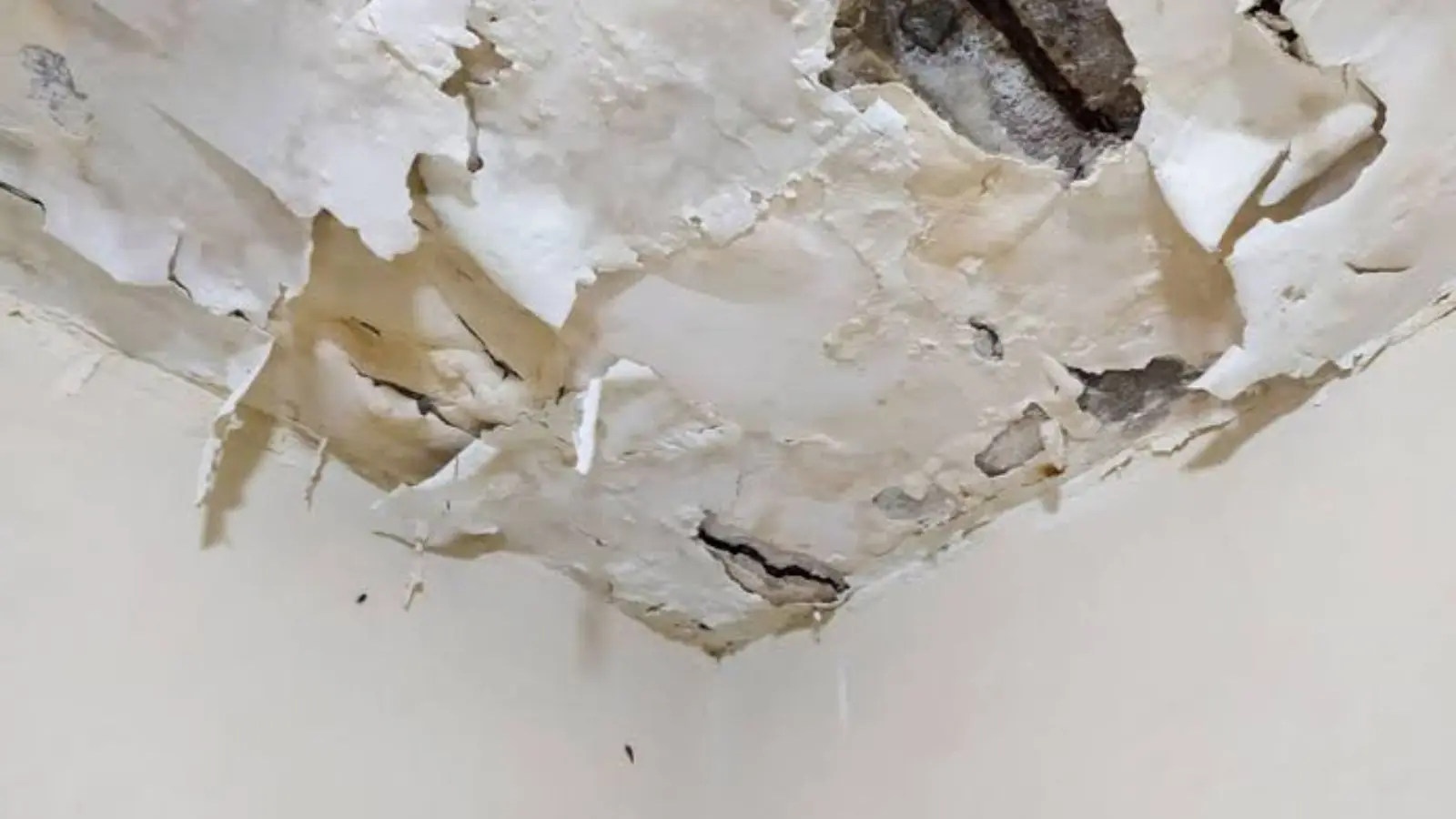
A ceiling stain is the end of a story that began somewhere above it. Before any patching, the leak has to be fixed and the area has to be dry. Repair is what happens after that, and doing it in the right order is what keeps the stain from returning.
This guide walks through the steps of a ceiling rebuild, the choices in texture and primer, and the point where a stain is too big for a patch.
Step one: confirm it is dry
Moisture meters read the drywall, and a thermal camera shows cool, damp areas. Press gently on the stain. If it is soft, bulging or crumbling, the drywall has absorbed too much water and should be cut out.
If the stain is firm and dry and you know the leak has stopped, it may only need sealing and paint. If you are not sure the leak is gone, wait through the next rain or fixture use before closing anything up.
Step two: cut, patch and tape
The damaged section is cut back to solid framing, wet insulation above is removed and a new piece of drywall is screwed into place. Seams are taped and covered with joint compound, which takes several thin coats with drying time between them.
Sanding comes last. Dust control matters here, since a ceiling patch fills a room with fine dust, and the work is best done with the HVAC off and the area covered.
Not sure whether your ceiling can be patched? Call and describe the stain.
☎ Call (760) 769-1159Step three: match the texture
| Texture | How it is matched | Notes |
|---|---|---|
| Flat or smooth | Skim coat and sand | Shows every flaw, so surface prep matters most |
| Knockdown | Spray or trowel texture, then knock down | Match the pattern size by testing on scrap |
| Orange peel | Spray texture at the right pressure | Test before applying across the ceiling |
| Popcorn or acoustic | Spray texture or patch material | Test older popcorn for asbestos before disturbing it |
Older popcorn ceilings, especially in homes built before the 1980s, may contain asbestos. If your ceiling is that age, have a sample tested by a qualified lab before scraping or sanding, and follow that result before anyone disturbs it.
For modern textures, a good texture match is as much about the pattern size as the material, so crews test on a scrap board before committing to the ceiling.
Step four: prime with a stain blocker, then paint
Regular paint does not block water stains. Tannins and minerals bleed through, and a brown ring appears in the new coat within weeks. A shellac-based or oil-based stain-blocking primer seals the stain, and then the ceiling is painted.
Painting the whole ceiling plane, not only the patch, avoids a visible edge. A flat ceiling paint hides small flaws better than a glossy one.
When the job is bigger than a patch
- The stain covers a large share of the ceiling.
- The drywall is sagging or has multiple soft areas.
- There is visible mold, which calls for mold remediation before closing up.
- The water was dirty, such as from a drain overflow upstairs.
- Insulation above is soaked and needs replacing.
Doing it yourself or hiring it out
A small, dry patch on a flat ceiling is a reasonable weekend project if you are comfortable on a ladder. The skill that separates a clean repair from a visible one is texture and finishing, not the drywall itself.
Hire out when the damage is larger than a dinner plate, when the ceiling is textured, when insulation above is wet, when mold is visible or when the cause is still unknown. A repair done before the source is found is a repair that will be done twice.
If you do patch it yourself, wear eye protection and a dust mask, protect the floor and furniture, and run no fan across the wet joint compound, since uneven drying cracks the surface.
Ceiling repair in Poway homes
Poway's first subdivision homes date to about 1959, and houses built in the decades after often have textured ceilings. If your ceiling was textured before the 1980s, treat the asbestos test as a safety step, not an optional extra, and wait for the lab result before anyone scrapes or sands.
Ask the City of Poway building department whether a ceiling repair in your house needs a permit. A cosmetic patch is usually treated differently from work that touches framing, wiring or the roof, and the city is the only source for the current rules.
For homes in Escondido, older ceilings may be plaster, which is repaired differently from drywall. In Ramona, summer air conditioner condensation is a frequent cause, so fixing the drain line comes before any patching.
Questions homeowners ask
If the house or the ceiling texture dates from before the 1980s, yes. Older popcorn texture may contain asbestos, so have a sample tested by a qualified lab before scraping or sanding.
Usually because the source is still active or the stain was not sealed with a stain-blocking primer. Regular paint lets the stain bleed through.
Yes, if the area is dry and firm. Use a stain-blocking primer first, then paint.
A patch often takes a few days because joint compound, primer and paint each need drying time. Larger repairs take longer.
Often when the leak was sudden and accidental. Check your policy and keep photos and moisture readings.
Planning a ceiling repair? Call and we will tell you what to confirm before it is patched.
☎ Call (760) 769-1159