
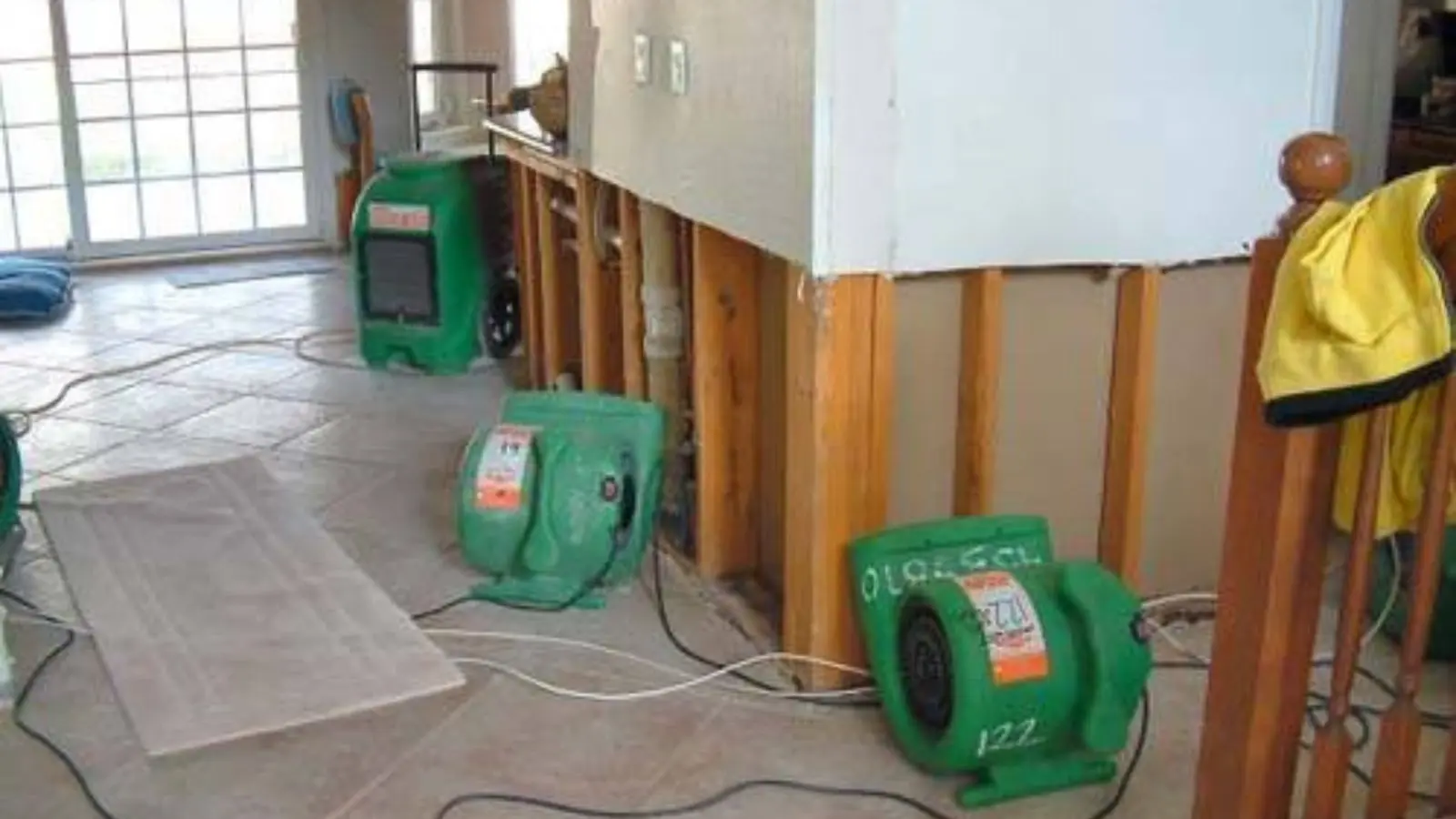
Wet drywall is not automatically ruined. Clean water caught early can often be dried in place, while dirty water or long exposure usually means cutting it out. The difference is the water category, the time and what the wall looks like.
This guide gives you the decision factors that restoration crews use, based on ANSI/IICRC S500 water damage practice.
The decision in one table
| Condition | Dry in place | Cut out |
|---|---|---|
| Water category | Category 1 clean water | Category 2 or 3, or any sewage |
| Time wet | Within about a day or two | Several days or longer |
| Surface | Firm and flat | Soft, crumbling, sagging or bulging |
| Paint and paper | Intact | Peeling or stained through |
| Insulation behind | Dry or lightly damp | Saturated |
| Mold | None visible | Visible growth or a persistent musty smell |
How drying in place works
Small holes are drilled near the base of the wall, or baseboard is removed, so air can be pushed into the cavity. Air movers and dehumidifiers run until moisture meters read the same as an unaffected wall.
This avoids demolition and cost when it works. It only works when the drywall is still firm and the cavity is clean. If readings stall, the wall is opened.
Not sure whether your drywall can stay? Call and describe how long it was wet.
☎ Call (760) 769-1159How cutting works
Crews mark the highest visible wet line and cut above it with a margin, since water wicks upward beyond what you see. Removed drywall and insulation are bagged, the framing is dried and cleaned, and new drywall goes in once readings are normal.
A cut-out wall is not a disaster. It is the way to confirm the cavity and framing are dry before they are closed again, and it makes the repair more reliable. Rebuilding is covered under water damage repair.
Drywall or plaster?
Houses from different eras have different wall materials. Drywall is a gypsum board with paper faces, usually about half an inch thick. Older homes may have plaster over wood or metal lath, which is thicker, harder and slower to dry.
Knock on the wall. Drywall sounds hollow, plaster sounds solid. Look at an outlet cover with the cover plate off, since the wall thickness at the box edge shows the material. Plaster usually needs a different drying plan, and some of it can be saved.
Baseboards, trim and paint after drying
Baseboards are often removed to dry the wall and reinstalled afterward. Solid wood trim usually survives if it dries flat, while MDF swells and is replaced.
Painted walls should be primed with a stain-blocking primer before the finish coat. Caulk gaps at the floor only after the wall is confirmed dry. Skipping these steps is how a repaired wall shows rings and bubbles a month later.
Keep the drying log. If paint peels or a smell returns, the log tells you what readings the wall had when it was closed.
Signs you should stop and call
- The wall has been wet for more than a few days.
- You see black or green spots, or the smell is strong.
- The water came from a drain, toilet or outside.
- The wall sounds mushy when you tap it.
- Electrical outlets or switches on the wall were wet.
Any one of these changes the answer from drying in place to opening the wall and checking what is behind it.
Drywall questions in Poway homes
Houses built in Poway from about 1959 and in the years after can have either plaster or drywall depending on the builder and the year. Do not assume. Check before you plan the drying, because plaster dries slower and some of it can be saved.
Exterior walls that were wet by a window or flashing leak are the walls most often in doubt. Look outside for the entry point as well as inside for the stain, and ask the crew to read both the wall surface and the cavity before deciding.
In Escondido, older central homes are more likely to have plaster. In Ramona, newer builds are mostly drywall, which dries faster but also fails faster if left wet. If mold is visible on the back of a cut-out section, mold remediation explains the next steps.
Questions homeowners ask
Knock on the wall: drywall sounds hollow and plaster sounds solid. Check the thickness at an outlet opening with the cover plate off. If you are unsure, a crew can tell with a moisture meter and a small inspection hole.
Clean-water drywall caught within a day or two can often be dried in place. After several days it usually softens and may grow mold, so it is cut out.
Only after moisture readings match an unaffected wall. Surface dryness can hide a wet cavity.
Water wicks upward beyond the visible stain, so the cut goes higher to remove the wet material.
Often when the water event was sudden and accidental. Check your policy and keep photos and moisture readings.
Not sure if a wall can stay? Call and describe how long it has been wet.
☎ Call (760) 769-1159