
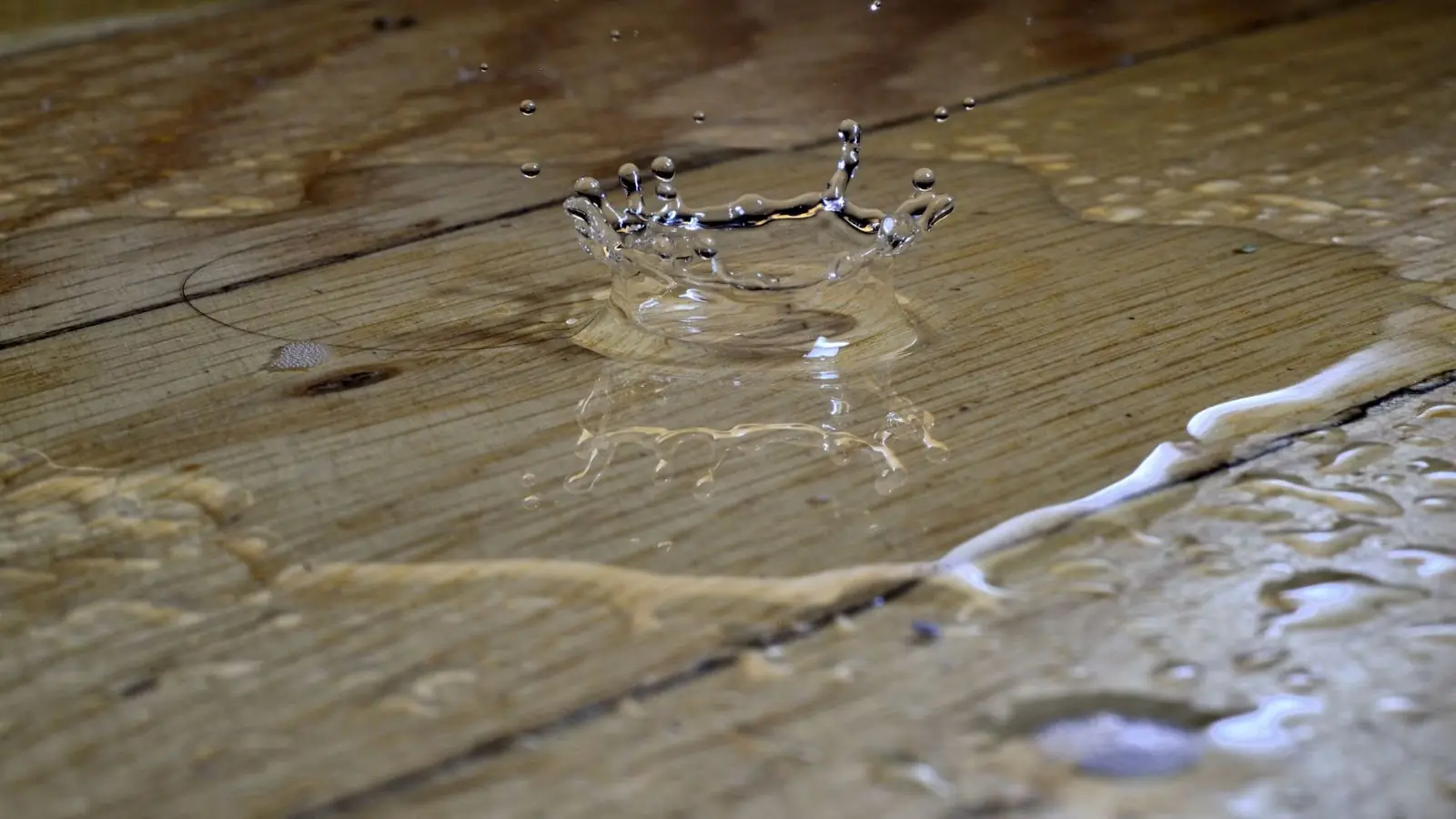
Hardwood is a natural material that takes on water along its edges and underside. When a leak soaks the subfloor or the floor itself, boards swell, edges rise and the surface starts to look like a shallow tray. That shape is called cupping, and it is the most common sign of moisture trouble in a wood floor.
Whether the floor can be saved depends on how wet it got, how long it stayed wet and what water touched it. This guide covers what each kind of damage looks like and what happens next.
Cupping, crowning and buckling
| Type | What it looks like | Typical cause | Usual outcome |
|---|---|---|---|
| Cupping | Edges higher than centers | Moisture from below or edges | May relax after slow drying. Sand only when stable. |
| Crowning | Centers higher than edges | Sanded while still cupped or dried unevenly | Often corrected by letting the floor settle before refinishing. |
| Buckling | Boards lift off the subfloor | Large water volume or long exposure | Often needs board or section replacement. |
| Staining | Black or gray marks | Water that sat long enough to react with the wood or finish | Sanding may not remove it. Boards may be replaced. |
What to do in the first hours
Stop the source and remove standing water. Lift rugs and furniture off the floor, mop up loose water and keep the floor from drying too fast with hot air or direct heat, since fast drying can split boards.
Wood floors are dried with controlled airflow and dehumidification, and sometimes with specialty drying mats that pull moisture from the boards. Moisture meters track progress, and drying stops when the wood returns to its normal reading.
Hardwood cupping after a leak? Call and describe the floor. We explain what to do before anything is sanded.
☎ Call (760) 769-1159How long does it take to flatten?
Mild cupping can relax over days or weeks after the moisture source is corrected and the floor dries slowly. Refinishing too early locks in the shape, and the edges can show through the new finish.
If the floor stays cupped after the moisture readings return to normal, sanding may flatten it. If boards have separated, split or turned dark, the affected boards are removed and replaced, then blended into the existing floor.
When replacement is the better call
- The floor is soft, spongy or separating from the subfloor.
- There is black staining that sanding does not remove.
- The water was dirty, which affects the whole floor's cleanliness and odor.
- Mold is visible on the underside of the boards.
- The floor is thin engineered wood, which has little material left to sand.
If you are weighing repair against replacement, ask the contractor for moisture readings of the subfloor and the boards, a written scope and a plan for blending new boards into old. Cleanup and sanitizing for contaminated water is covered under water damage cleanup.
Refinishing after drying: what to expect
Once the floor is dry and stable, a refinish can restore the surface. Sanding removes a thin layer of wood, which is why solid hardwood can be refinished several times in its life while thin engineered boards may allow only one pass or none.
Stain color rarely matches new boards to old ones exactly. A good installer blends by feathering replaced boards into the surrounding area and refinishing the whole room, not only the patch. Ask to see a sample on your wood species before you agree.
- Ask for moisture readings that show the floor and subfloor are at normal levels.
- Ask whether the finish is oil-based or water-based, since that changes drying and odor.
- Ask how long the room should stay off-limits for furniture and rugs after the final coat.
Hardwood and Poway's dry, hot climate
Poway sits inland at about 500 feet and its summers run hot, with a record high of 114 degrees Fahrenheit. Air conditioning keeps indoor air dry for much of the year, so wood floors shrink and swell with the seasons. A mild leak can look worse or better than it really is depending on the month you check it.
Many Poway houses sit on concrete slabs, and hardwood installed over a slab can wick moisture from below when a pipe leaks or a crack lets water through. Ask the crew to take readings on the slab as well as the boards, and ask whether a moisture barrier was installed under the floor.
Floors in Escondido and Ramona face the same question. Hotter inland summers and colder valley winters change how a cupped floor behaves, and the drying plan reflects that.
Questions homeowners ask
Do not rely on either. A dehumidifier and controlled airflow dry a floor predictably. During the rainy months from November to March, outdoor air can be damp, and an air conditioner alone does not pull enough moisture from the wood.
No. Wait until moisture readings are back to normal, since sanding too early can leave the floor crowned once it finishes drying.
Yes. Engineered wood has a thinner wear layer and a layered core, so it often cannot be sanded as much and may be replaced more readily.
That is gray water, which adds cleaning and sanitizing. Porous materials are more likely to be replaced.
Often, for sudden and accidental leaks, but wording differs. Check your policy and keep moisture readings and photos.
Boards moving after a leak? Call and describe how the floor looks and feels.
☎ Call (760) 769-1159